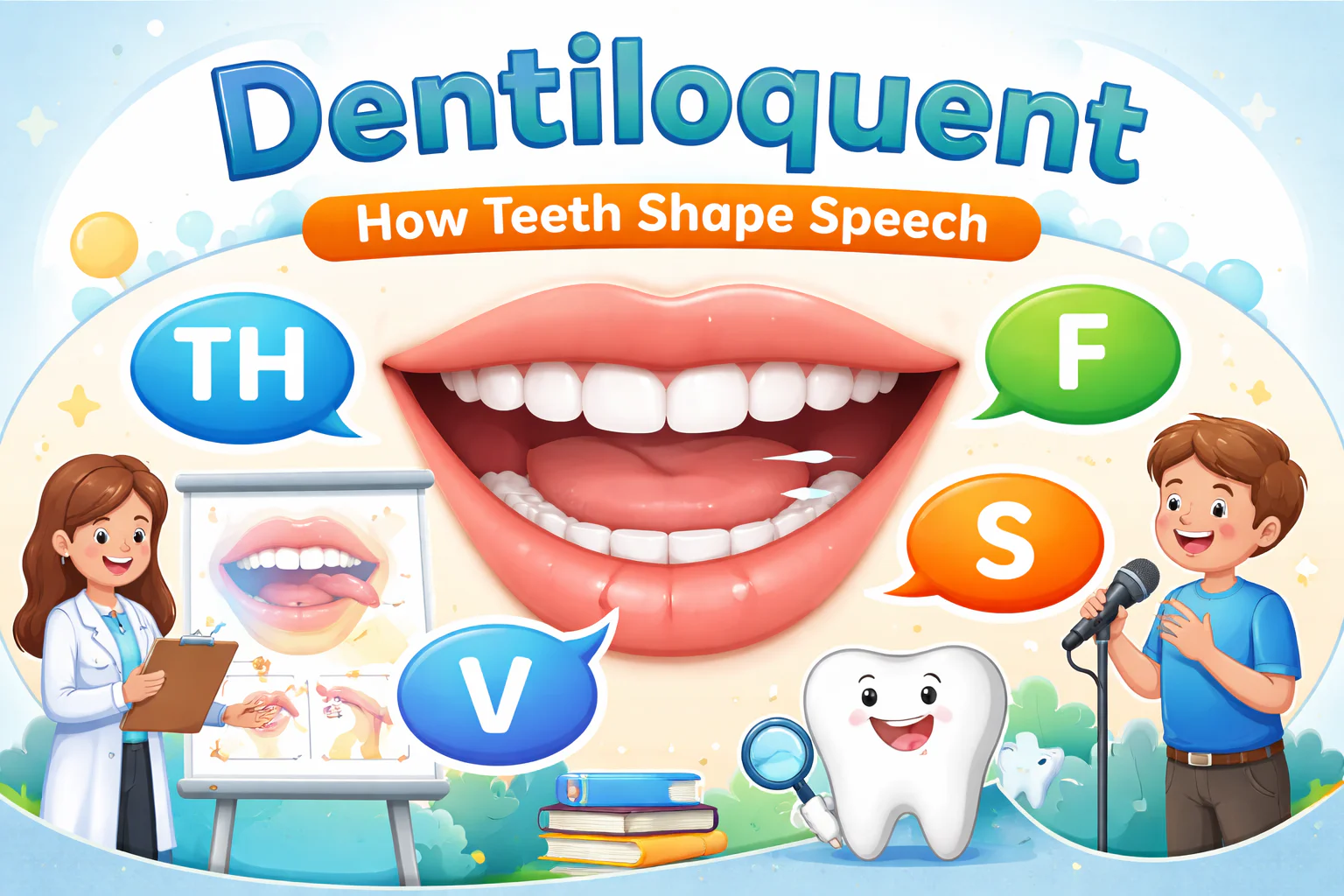
Have you ever noticed how your teeth help shape your voice? Most people never think about it, yet it plays a quiet but powerful role in everyday speech. This idea is known as dentiloquent, and it simply means speaking with the help of your teeth. From soft “th” sounds to sharp “s” tones, your teeth guide many words you say daily.
Understanding dentiloquent speech can help you improve clarity and confidence. It also explains why accents sound different and why some people struggle with certain sounds. Once you become aware of it, you start hearing speech in a whole new way.
What Does Dentiloquent Really Mean?
The word dentiloquent comes from Latin roots. “Denti” refers to teeth, while “loqui” refers to speaking. Together, they describe speech shaped by the contact between the tongue and teeth. This happens naturally when you pronounce sounds like “th,” “f,” or “v.”
Without realizing it, the majority of people speak in this manner. It becomes noticeable when someone has a strong accent or a speech habit. In simple terms, dentiloquent describes how teeth guide airflow and sound while you talk, helping produce clear and distinct words.
Why Teeth Matter in Everyday Speech
Teeth are not just for chewing food. They act as a support system for many speech sounds. When air passes through your mouth, your teeth help control its direction and pressure. This makes your words clearer and easier to understand.
Without proper tooth positioning, some sounds become weak or unclear. For example, “s” and “z” sounds may lose sharpness. That’s why dentiloquent patterns are important. They help create balance between the tongue, lips, and airflow, giving your speech its natural rhythm and clarity.
How Speech Sounds Are Formed
Speech happens when air moves from your lungs through your mouth. Your tongue, lips, and teeth work together to shape that air into words. Teeth act as a stopping or guiding point for many sounds.
When you say “th,” your tongue lightly touches your front teeth. This creates a soft vibration. This is a clear example of dentiloquent speech in action. Even small changes in tooth position can affect how sounds are produced, which is why every person’s speech sounds unique.
Common Speech Problems Linked to Teeth
Some people face speech issues because of how their teeth are shaped or placed. A common example is a lisp. When speaking, the tongue pushes too far forward between the teeth.
Other problems can come from gaps, missing teeth, or misalignment. These issues can affect how clearly words are spoken. In such cases, dentiloquent patterns become more noticeable. The good news is that many of these problems can be improved with simple exercises or dental care.
How Dentiloquent Speech Affects Communication
Speech clarity plays a big role in how people understand you. If your sounds are not clear, your message may get lost. Dentiloquent speech can either help or challenge communication depending on how it is used.
In some cases, it adds a unique charm to a person’s voice. In others, it may create confusion. The key is balance. When teeth, tongue, and airflow work together smoothly, communication becomes natural and effortless.
Is It a Speech Disorder?
Dentiloquent speech itself is not a disorder. It is a natural part of how humans talk. However, if someone struggles to pronounce basic sounds, it may point to a speech issue.
Speech disorders happen when sound production becomes difficult or unclear. If dentiloquent patterns cause frequent misunderstandings, it may help to seek guidance from a speech expert. Early support can make a big difference in improving clarity.
Simple Ways to Improve Speech Clarity
Improving speech does not have to be complicated. Small daily habits can help a lot. Practicing slow and clear speaking is one of the best ways to start. Focus on how your tongue and teeth work together.
Reading aloud is also helpful. It trains your mouth to form words correctly. In some cases, dental alignment can improve speech quality. With time and practice, dentiloquent patterns become more controlled and natural.
How Accents Shape Speech Patterns
Every region uses its own dialect. Accents change how sounds are formed and heard. In some accents, the “th” sound is strong and clear. In others, it may sound like “f” or “d.”
These differences are often linked to dentiloquent habits. They show how culture and language influence speech. This is why people from different places sound unique, even when speaking the same language.
Real-Life Examples You Can Notice
Think about how different people say the word “think.” Some say it softly, while others make the “th” sound sharper. This is a simple example of dentiloquent variation.
You may also notice this in movies, interviews, or daily conversations. Once you pay attention, you will start spotting these patterns everywhere. It helps you understand how speech works in real life.
When to Consider Speech Therapy
If speaking clearly feels difficult, professional help can be useful. Speech therapists teach simple techniques to improve sound formation. They focus on tongue placement and airflow control.
These exercises help correct dentiloquent issues that affect clarity. Over time, speech becomes smoother and more confident. Many people see strong improvement with regular practice and guidance.
Why Understanding Speech Matters
Learning about how you speak builds awareness. It improves your communication skills and boosts your self-assurance. Dentiloquent speech is just one part of a bigger system that shapes your voice.
When you understand it, you gain better control over your words. This can help in school, work, and daily life. Clear speech makes a strong impression and helps others understand you easily.
FAQs
It means speaking with the help of your teeth, especially when forming sounds like “th” or “s.”
Yes, it is a natural part of how most people speak.
Yes, simple exercises and reading aloud can improve clarity over time.
Sometimes, but in most cases, it does not cause major problems.
If you struggle to pronounce basic sounds clearly, it may help.
Yes, misaligned or missing teeth can change how sounds are formed.
Conclusion
Speech is something you use every day, yet rarely think about. Dentiloquent patterns show how your teeth quietly shape your voice. By understanding this, you can improve how you speak and connect with others.
With a little awareness and practice, clearer speech becomes easy. Pay attention to your words, notice how your mouth moves, and keep improving step by step. Strong communication always starts with small changes.