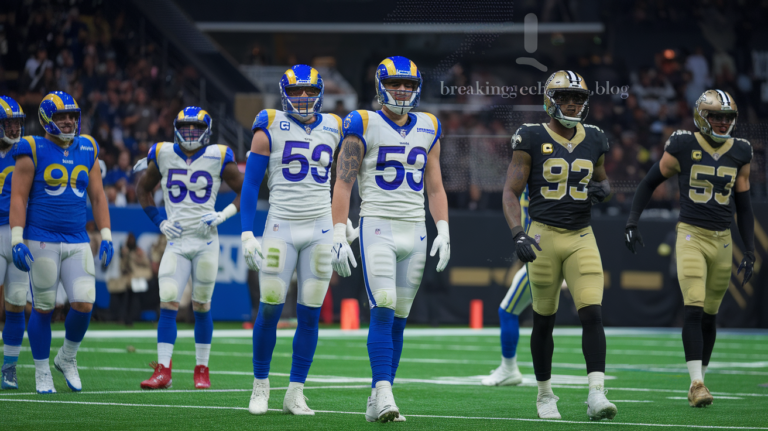
If you are searching for chicago bears vs bengals match player stats, two things at once. You want the numbers, and you want the story behind them. This game had both. On November 2, 2025, Chicago beat Cincinnati 47–42 in a wild shootout at Paycor Stadium.
The box score was loud. The Bears piled up 576 total yards. The Bengals answered with 495 yards. Cincinnati’s quarterback Joe Flacco threw for 470 yards and four scores, but also two picks. Chicago’s Caleb Williams hit clutch throws late, then finished with a rare mixed stat line that made history talk feel real.
Quick game snapshot and why the stats matter
The final score was close, but the flow of the game was not simple. Cincinnati started fast with a 98-yard kickoff return touchdown by Charlie Jones. That kind of play changes everything. It flips field position, momentum, and play calling. Chicago still kept scoring, drive after drive, and built a lead. After that, the fourth quarter became a track meet.
When you read chicago bears vs bengals match player stats, do not only look at totals. Look at timing, too. The Bears had a late-game winning drive and finished with one last punch. It ended with a huge touchdown to rookie tight end Colston Loveland. That one play can hide many other details, like run blocking and clock control. We will break it down in plain words.
Team totals that explain the whole game.
Start with the simplest truth. Chicago moved the ball better on the ground. The Bears ran for 283 rushing yards. The Bengals ran for only 46. That gap is massive. It meant Chicago could stay on schedule and avoid long third downs.
Cincinnati still kept up because its passing game exploded. The Bengals threw for 449 passing yards as a team. Chicago threw for 293. Both teams averaged 7.6 yards per play, which tells you the game was full of big gains.
So the trade was clear. Chicago won with power running and balance. Cincinnati tried to win with air yards and fast strikes. This is a great example of how chicago bears vs bengals match player stats can show two different team styles in one afternoon.
Caleb Williams’ stat line in plain language
Caleb Williams did not just put up normal quarterback numbers. He filled the whole sheet. He finished with 280 passing yards and a big rushing total, too. The Bears team notes also highlighted a rare “triple” style line, with strong passing, rushing, and even receiving impact in the same game.
This matters because it changes how defenses must play. If a quarterback can hurt you with his legs, safeties freeze. If he can also throw deep and throw on time, corners cannot squat. Williams also delivered late, which is the part fans remember most. One clutch drive can raise trust in a young quarterback more than three quiet drives.
When people search chicago bears vs bengals match player stats, Williams is usually the first name they click. Now you know why. His numbers were not empty. They matched the moment.
Joe Flacco’s monster passing day, and the two numbers that hurt.
Joe Flacco’s line was huge. He threw for four touchdowns and 470 yards. That is a big day for any quarterback. Reuters reported it as a career-high passing yard game, even while he battled a shoulder issue.
But two numbers matter just as much as the yards. Flacco had two interceptions. One can be a tip or a bad bounce. Two usually means the defense got at least one real win. In a five-point game, a single extra drive can be the difference.
This is why raw yardage can fool people. Cincinnati’s offense was hot, but the picks gave Chicago extra chances. In chicago bears vs bengals match player stats, the turnover column often tells you who truly controlled the outcome.
The rushing battle that tilted the field
If you want one clean reason Chicago won, look at the run game. The Bears did not just run. They ran with force, and they ran often. That kept the Bengals offense on the sideline and kept Chicago out of risky spots.
One name stands out. Kyle Monangai ran for 176 yards on 26 carries, according to Reuters. That is the kind of stat line that breaks a defense’s will. It also makes play action stronger, because linebackers must step up.
Cincinnati could not match that. With only 46 rushing yards as a team, the Bengals were forced to live through the air. That can work, but it is harder in the final minutes. This is a core lesson from chicago bears vs bengals match player stats.
Receiving leaders and the plays people will replay
Chicago’s headline catch was the ending. Colston Loveland went 6 catches, 118 yards, 2 touchdowns, including the game-winning score. Big tight end games are often about matchups. When the run stresses linebackers, seams open up.
For Cincinnati, two stars did heavy damage. Tee Higgins had 121 receiving yards and two touchdowns. Ja’Marr Chase added 111 yards. Those are the winning numbers most weeks.
So why did Cincinnati still lose? Because explosive catches do not always equal control. Chicago had answers on the ground. Chicago also avoided the big mistake at quarterback. When you read chicago bears vs bengals match player stats, always balance “highlight catches” with “steady drives.”
Defense, pressure, and why sacks do not tell the whole story
This game was not a defensive showcase, but defense still mattered. Cincinnati threw for 470 yards, yet the Bears’ defense made the two interceptions that shaped the finish.
Also note the sack numbers. ESPN team stats show Chicago took two sacks for nine yards lost, while Cincinnati took three sacks for 21 yards lost. That suggests Chicago handled pressure better. It also suggests Chicago’s offense stayed calmer in key spots.
In shootouts, defenses win in small ways. A third-down stop. A red zone hold. A takeaway at the right time. Those moments may not look big, but they change the score math fast. That is why chicago bears vs bengals match player stats should include turnovers and sacks, not only yards.
Special teams: the hidden reason the start felt chaotic
You cannot talk about this game without special teams. Cincinnati opened with a bang. Charlie Jones returned a kickoff 98 yards and scored. That is one of the fastest ways to put points on the board, and it instantly changes how both coaches think.
A return touchdown can also hide problems. It can make an offense look fine early, even if the offense is not yet in rhythm. Later, when drives must be built the hard way, the truth shows up.
Chicago did not panic after that return. They answered with long drives and strong run fits. That calm response matters as much as any single stat line. If you are using chicago bears vs bengals match player stats for analysis, always scan kick returns, field position, and sudden-change drives.
The late scoring swing and how to read it like a fan and like a coach
Reuters described the ending as dramatic, with Cincinnati taking a late lead before Chicago answered again. That is the kind of finish where every snap feels loud. But there is a simple way to read it.
Ask two questions. First, who can get a first down on the ground when everyone knows you need it? Second, who can protect the ball when the game is tight? Chicago’s rushing edge meant they could still move the chains without forcing risky throws.
Cincinnati had to keep throwing. That kept the ceiling high, but it also raised the chance of a mistake. In a one-score game, the “chance of mistake” becomes a real opponent. This is a key takeaway from chicago bears vs bengals match player stats.
What these stats say about the Bears going forward
Chicago’s biggest positive was balance. They proved they can win even when the other team throws for nearly 500 yards. That sounds strange, but it is true. If you can run for 283 yards and still hit big throws late, you can survive many game scripts.
The Bears also got a signature moment from a young core. Williams to Loveland is the kind of connection teams build around. It is not just one touchdown. It is trust. It is timing. It is a shared memory that helps in future close games.
Still, Chicago will not want to allow that many points often. A 47–42 win is fun, but it is risky. The best teams learn from wins, too. If you are tracking chicago bears vs bengals match player stats for trends, watch how Chicago cleans up late-game defense after this one.
What these stats say about the Bengals going forward
For Cincinnati, the passing attack showed it can scare anyone. Flacco’s 470 yards and four touchdowns prove the system can produce huge days. Higgins and Chase both hit big numbers, too.
But the Bengals had two problems that were hard to hide. One was turnovers. Two interceptions in a shootout can be fatal. The other was run defense. Giving up 283 rushing yards means you did not control the line of scrimmage.
When you cannot stop the run, you cannot control the clock. When you cannot control the clock, your offense must be perfect. That is not a fair plan, even for great players. So the Bengals’ story here is not “our offense failed.” It is “our team balance failed.” That is the deeper meaning inside chicago bears vs bengals match player stats.
How to use match player stats without getting tricked
Here is a simple rule. Start with three columns: turnovers, rushing yards, and explosive plays. Then check quarterback efficiency. Yards alone can lie. A team can gain yards while chasing a game. A team can also gain yards because the other team plays soft late.
In this game, the Bears had the rushing edge by a mile. The Bengals had the passing edge by a mile. The tie-breakers were turnovers and late execution. That is why Chicago won.
So when you read chicago bears vs bengals match player stats, look for the “reason” hidden behind the “result.” Ask what style of football each team tried to play. Then ask which style held up in the final five minutes. That method will make you smarter than most box-score scrolling.
FAQs about chicago bears vs bengals match player stats.
1) What was the final score of the most recent Bears vs Bengals game?
The most recent matchup ended with Chicago beating Cincinnati 47–42 on November 2, 2025. The game was a shootout with fast scoring and a big late twist. The Bears ended it with a long touchdown to Colston Loveland. It was the type of game where the final minute decides everything, even after a full day of big plays.
2) Who had the best passing stats in the game?
Joe Flacco had the biggest passing day. He threw for four touchdowns and 470 yards. That is an elite yardage total, even in today’s NFL. But the two interceptions mattered too. In close games, one mistake can erase a full quarter of good throws.
3) What was the biggest reason the Bears won?
Chicago dominated the run game. The Bears ran for 283 yards, while the Bengals ran for 46. That one stat explains the control Chicago had for long stretches. It also explains how they could answer late. A strong run game helps you stay calm when the clock is shrinking.
4) Who led the Bears in rushing, and why does it matter?
Kyle Monangai led Chicago with 176 rushing yards on 26 carries, as reported by Reuters. That matters because it keeps the offense balanced. It also forces the defense to respect play action. When a defense is worried about the run, passing windows get easier for the quarterback.
5) Who were the top receivers in the game?
For Chicago, Colston Loveland had 6 catches for 118 yards and 2 touchdowns. For Cincinnati, Tee Higgins had 121 yards and 2 touchdowns, and Ja’Marr Chase had 111 yards. Those are big-time numbers. They show both teams had matchup wins all over the field.
6) Where can I verify the full box score for every player?
A reliable place is ESPN’s box score page and Pro Football Reference’s game page. These sources list passing, rushing, receiving, fumbles, kicking, and defensive stats. If you want quick team totals, ESPN team stats are also helpful. For official team framing, the Bears site also publishes a game box score and a “By the Numbers” recap.
Conclusion
This game is a perfect lesson in how football can be won in different ways. Cincinnati threw for massive yards. Chicago ran the ball like a hammer. Both worked, but only one held up at the end.
When you look up chicago bears vs bengals match player stats, do not stop at highlights. Read the run totals. Check turnovers. Notice who controlled the clock and who had to chase it. That is how you turn numbers into real understanding.
READ MORE: Carolina Panthers vs Cleveland Browns Match Player Stats